Asphalt crack repair in Boulder, CO
Boulder's cold winters and dry, sunny summers are hard on asphalt. We seal cracks in parking lots, private streets, and driveways with hot-rubber sealant before water reaches the base and turns them into potholes. Free on-site estimates from a locally owned crew serving the Front Range since 1998.
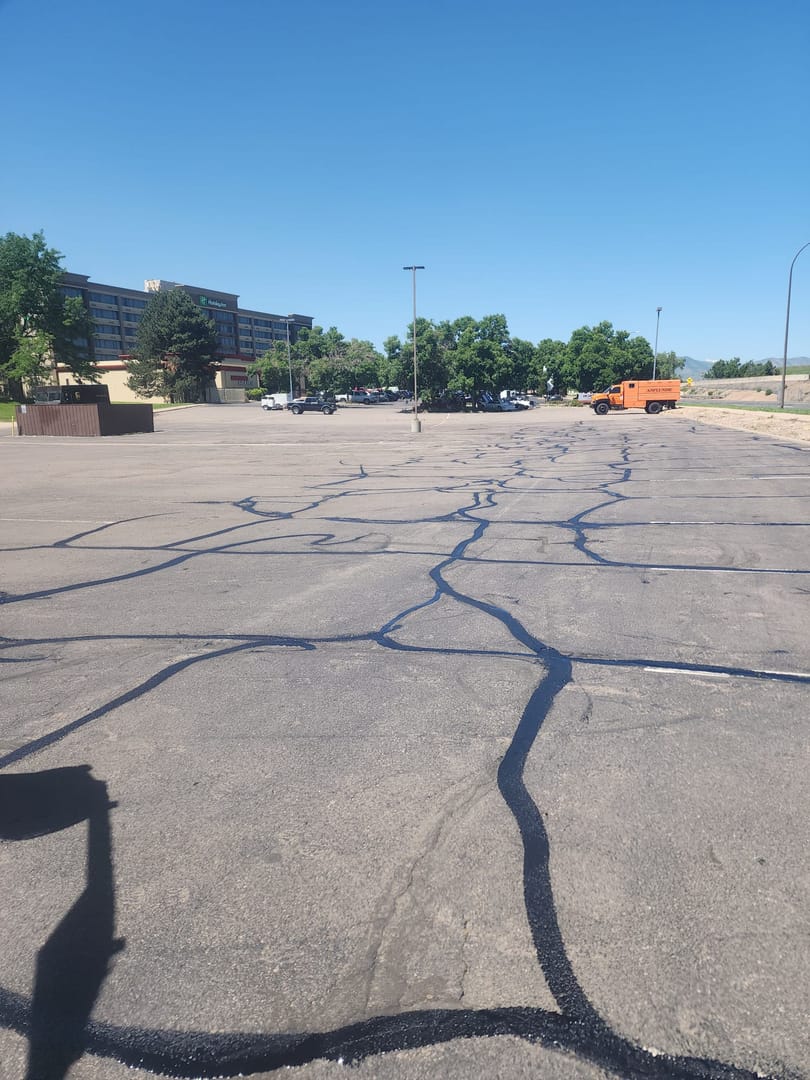
Crack repair by our Front Range crew.
What causes asphalt to crack in Boulder
Most cracks come from a handful of causes, and Boulder's climate amplifies several of them. Knowing the cause helps us choose a repair that lasts.
Freeze-thaw cycles
Winter days that warm up and nights that drop below freezing make asphalt expand and contract over and over, opening new cracks and widening old ones.
Sun and dry air
Boulder's strong sun and dry summers dry out the asphalt binder, making the surface brittle and quicker to crack.
Heavy traffic
Delivery trucks, trash trucks, and steady parking-lot traffic put repeated stress on the pavement.
Age and installation
All asphalt wears with age, and pavement that was poorly compacted or laid too thin cracks sooner.
Sun damage and cracking go together. Once cracks are sealed, a sealcoat protects the rest of the surface from UV and water. See asphalt sealcoating in Boulder.
Choosing the right crack repair
The size of the crack and the condition of the pavement around it decide the fix.
Hot-rubber crack sealing
Our standard repair. Rubberized sealant is heated and poured into cleaned cracks, where it bonds to the sides and stays flexible as the pavement moves through Boulder's temperature swings.
Cold-pour sealant
Ready-to-use sealants can handle very small cracks, but they generally don't hold up as long as hot-pour sealant on cracks that move or see heavy traffic.
When sealant isn't enough
Wide, sunken, or interconnected "alligator" cracks mean the base has failed. Those areas need patching, not sealant.
Signs your Boulder pavement needs crack repair
If you're seeing any of these on your lot or driveway, it's time for a free inspection.
Cracks turning into potholes?
Once pieces start breaking out, the area needs a patch. See pothole patching and repairs in Boulder.
Get a free on-site estimateCommercial and residential crack repair in Boulder
From one cracked driveway to a large commercial lot, we size the crew and equipment to the job.
Commercial: parking lots, HOAs, and multifamily
Sealing cracks across a whole lot is one of the most cost-effective things a property manager can do for the pavement budget.
Pair crack sealing with sealcoating and fresh parking lot striping in Boulder.
Residential: driveways and private paths
Sealing driveway cracks now costs far less than replacing a driveway later.
If the driveway is past saving, we also handle asphalt paving in Boulder.
Our asphalt crack repair process
Free assessment
We look at how widespread and severe the cracking is, along with the pavement's age, traffic, and drainage, then recommend the right repair.
Clean and prep
We clear out dirt, debris, and vegetation, and remove old failed sealant so the new material bonds properly.
Seal
We fill each crack with hot-rubber sealant to keep water out of the base and stand up to traffic and weather.
How to keep cracks from coming back
A little maintenance goes a long way toward fewer cracks and a longer-lasting surface.
Inspect regularly
Walk your pavement each spring and fall. Catch new cracks, potholes, and pooling water while they're small.
Keep water moving
Make sure the pavement is graded so water drains off instead of sitting on the surface or soaking into cracks.
Avoid overloading
Heavy equipment and parked trucks put extra stress on asphalt, especially on pavement built for passenger cars.
Crack repair across Boulder
We repair cracked parking lots, private streets, and driveways throughout Boulder, including North Boulder, Gunbarrel, and Table Mesa, and along the US-36 and Diagonal Highway corridors. Our crews work across the Front Range, so scheduling an on-site estimate in Boulder is easy.
Fall is a smart time to seal cracks in Boulder. Sealing before winter keeps water from freezing inside the cracks and widening them, and the sealant needs dry pavement to bond.
Asphalt & Concrete Services of Metro Denver
804 W 64th, Denver, CO 80221
Serving Boulder and all of Metro Denver
Why Boulder property owners choose us
Asphalt & Concrete Services of Metro Denver has paved and maintained Front Range pavement for over 25 years, with honest recommendations and no upselling.
Boulder asphalt crack repair FAQs
Does Boulder's climate make asphalt crack faster?
Yes. Frequent freeze-thaw cycles in winter and strong sun with dry air in summer both speed up cracking. That's why regular crack sealing and sealcoating matter more here than in milder climates.
What's the difference between hot-pour and cold-pour crack sealant?
Hot-pour rubberized sealant is heated and poured into the crack, bonding strongly and staying flexible as the pavement moves. Cold-pour sealant is applied straight from the container and suits very small cracks, but generally doesn't last as long under traffic and temperature swings.
Do you remove old sealant before resealing a crack?
Yes. Failed sealant and debris are cleaned out first so the new sealant bonds to the pavement instead of to old material that's already pulling away.
Should I sealcoat after crack repair?
In most cases, yes. Crack sealing closes the openings, and a sealcoat protects the rest of the surface from sun and water. See sealcoating in Boulder.
Can I seal asphalt cracks myself?
Very small cracks can be handled with a store-bought sealant. For larger cracks, many cracks across a lot, or cracks that keep reopening, a professional crew with hot-pour equipment gives a longer-lasting result.
Do you offer free crack repair estimates in Boulder?
Yes. We provide complimentary on-site estimates throughout Boulder. Request one online or call 303-810-0079.
More questions? Visit our FAQ page.
More asphalt services
Other services in Boulder
Seal your Boulder cracks before the next freeze
Get a fast, no-obligation estimate for crack repair on your Boulder parking lot, private street, or driveway. We stand behind every job with a satisfaction guarantee.